AFCPE Symposium Awards: Outstanding Research to Practice Award

The Outstanding Symposium Research to Practice Award recognizes AFCPE members who exemplify the connection between academic research and hands-on financial practice. Presented annually at the AFCPE Symposium, the award honors researchers whose work demonstrates how research findings can be translated into practical tools, programs, and strategies that benefit financial counselors, coaches, and educators. Congratulations to 2025 recipients Chet Bennetts and Eric Ludwig. 

Celebrating Outstanding Symposium Research to Practice Award Winners

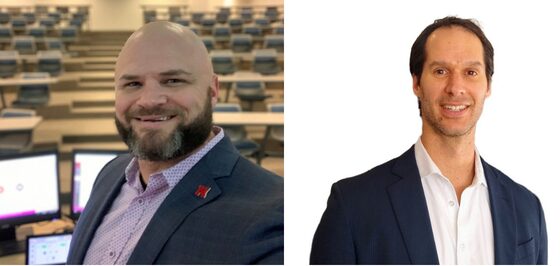
left to right: white man with a beard and bald head smiling in a dark grey blazer and pink collared shirt and a white man smiling with dark short hair and a black blazer with a white collared shirt

2025: Chet Bennetts, PhD and Eric Ludwig, PhD
The American College of Financial Services

Their session, “AI Financial Help-Seeking Behavior: Consumers’ Use of AI for Personal Finance and the Role of Financial Planners, Counselors, and Educators” explores how consumers are turning to artificial intelligence tools for personal finance guidance and what that means for financial professionals. It examines the motivations behind AI help-seeking behavior, how people are using AI in their financial decision-making, and the evolving role of financial planners, counselors, and educators in a landscape where AI is becoming an increasingly accessible resource.


2024: Lucy M. Delgadillo and Glen Andrew Haas 
Utah State University

In the session, “What did we learn from the FBI that we can use in coaching and counseling? 50 Non-Verbal Cues in 50 minutes” Lucy M. Delgadillo and Glen Andrew Haas examine the profound significance of non-verbal communication, as an educational opportunity to enhance their coaching and counseling soft skills. Non-verbal cues are genuine expressions of our inner thoughts and feelings. While we may maintain a composed demeanor, our bodies reveal the truth, as expertly highlighted by former FBI agent, Joe Navarro (2020). For instance, our lips play a crucial role in conveying subtle nuances. The most honest part of our bodies: our feet. This seminar offers a unique opportunity to explore 50 non-verbal cues that may indicate when you are building (or losing) empathetic connection, active listening and establishing trust and intimacy in our financial sessions.

left to right a white man with dark hair and beard wearing glasses in a light colored collared shirt. to the right an older white man with glasses and a dark suit with a blue bow tie

2023: Adam Felts and Joseph Coughlin
MIT AgeLab

In 2021, researchers began a project with a large financial services company to develop a “playbook” to help guide client-facing financial planners who work with family caregivers. “Developing a Caregiving “Playbook” for Financial Planners” discussed the co-creative process of developing the playbook as well the playbook itself, which provides an overview of how financial professionals can work with and assist caregiving clients.


2022: Jodi Kaus and Dr. Han Na Lim
Kansas State University
“Evaluation on the Effectiveness of College Financial Success Plan (CFSP).” was developed at a large Midwest public university. The purpose of the CFSP project is to help returning freshmen to determine a personal plan for paying the costs of obtaining their undergraduate degree. The project launched in the spring 2020 and was implemented again in spring 2022. Overall, participants reported that the CFSP process and resources were extremely useful. Through the CFSP process, participants reported that they are likely to reduce the amount of student loan borrowing and know more about how much student loan debt they can afford. When examining changes between before and after the CFSP program, knowledge about student loans was increased and financial stress and anxiety were decreased after the CFSP session. The findings provide insights for financial educators or counselors working at higher education and financial practitioners working with family with college age children.

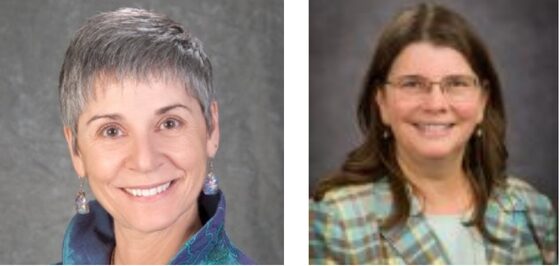
left to right: white woman with short grey hair smiling wearing a blue shirt with a grey background. on the right, a white woman with long brown hair smiling with a green and brown striped shirt and a dark grey background.

2021: Joyce Serido and Sharon Powell
University of Minnesota
University of Minnesota Extension

The research-to-practice forum “Make Money Make $ense” demonstrates how to use a 10-lesson youth financial activity toolkit to encourage positive financial socialization. Each activity focuses on a specific financial topic (e.g., values, smart shopping, saving, goal setting) framed in the context of experiences that youth encounter. Each activity provides opportunities for supportive adults to engage youth in making financial choices. They describe the collaborative process used to develop the toolkit and to validate the activities. In addition, they provide examples of how we adapted the activities for use in multiple settings and across different age groups.

white woman with long red hair smiling wearing glasses and a red shirt amid a grey backdrop

2020: Sandra J. Huston

“Using Research to Inform and Enhance Financial Learning Practices” uses a variety of personal finance, economic, and pedagogical theories, along with research findings from previous studies, several quasi-experimental and descriptive studies have been conducted to test hypotheses designed to establish evidence-based financial education (specifically financial learning) practices. These research studies have been conducted over the past three years in collaboration with a college-level personal finance education program at a large university in the south-central region of the United States. Over 20 instructors and 3000 students were involved in this collaboration for data collection to support this research.

top row: on left white woman with long blonde hair smiling in a black blazer and red shirt with a black background. In the middle of top row an asian woman with long black hair and a white shirt with a white background. On the right of the top row a white woman with short brown hair in a pink patterned shirt and a grey background. Bottom row: on the left a white man with a black suit and tie and white collared shirt with short brown hair with a grey background. On the right a white woman with long reddish hair smiling wearing a dark blazer and teal shirt with a grey background

2019: Kristy Archuleta and Danah Jeong
University of Georgia
Joy Clady and Derek Lawson
Kansas State University
Christina Glenn
Fort Hays State University

“Can Money Habitudes Make a Difference? An experiment to bridge research and practice” examines if a tool used in practice – Money Habitudes – could make a difference in a number of personal domains of one’s life – including financial behaviors, financial anxiety, relationship satisfaction, similar money goals and values, couple communication with money, and financial cognitions. The results indicated that playing online Money Habitudes improved a number of financial domains.

Our Members Apply Research to Empower Communities. Join AFCPE

As an AFCPE member, you’ll gain access to exclusive awards, grants, professional development opportunities, and a diverse and inclusive network of financial professionals, researchers, practitioners, and educators dedicated to making a difference.

Comments are closed.