2026 AFCPE® Invitation to Present

We will soon be opening our Invitation to Present application window. Whether for an In-Person Session, In-Person Poster Presentation, or a Pre-recording OnDemand Session, this is your opportunity to make an impact on Symposium attendees and share insights to inform the future of financial counseling and research. 

Application window opens March 16th, 2026 and closes on May 8th, 2026.

Invitation to Present Session Types

The Symposium Task Force will consider proposals for the following sessions:

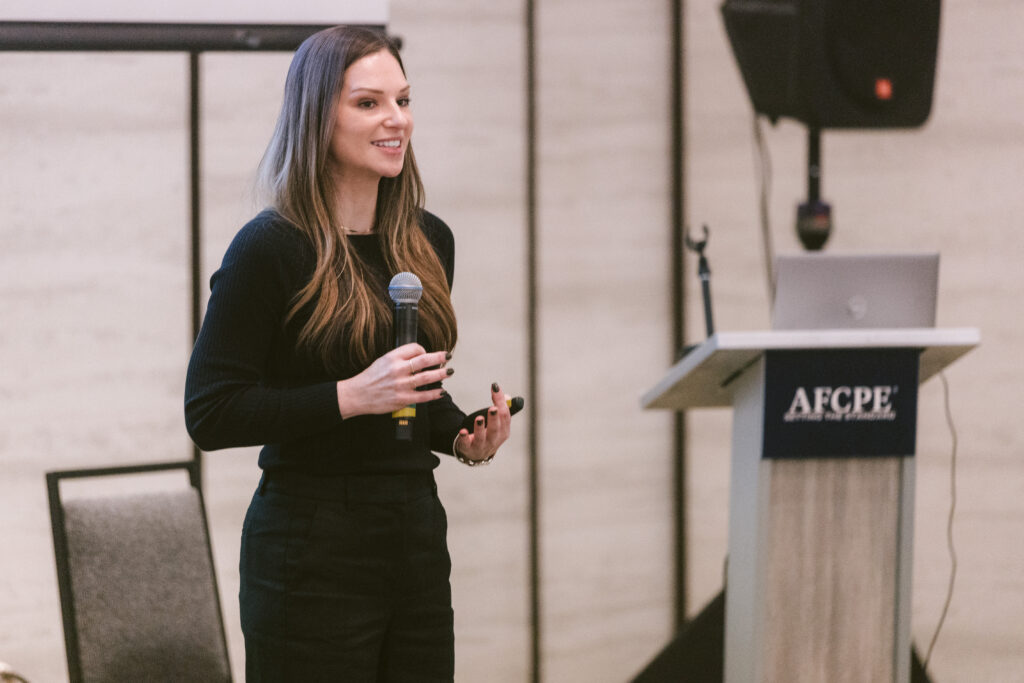
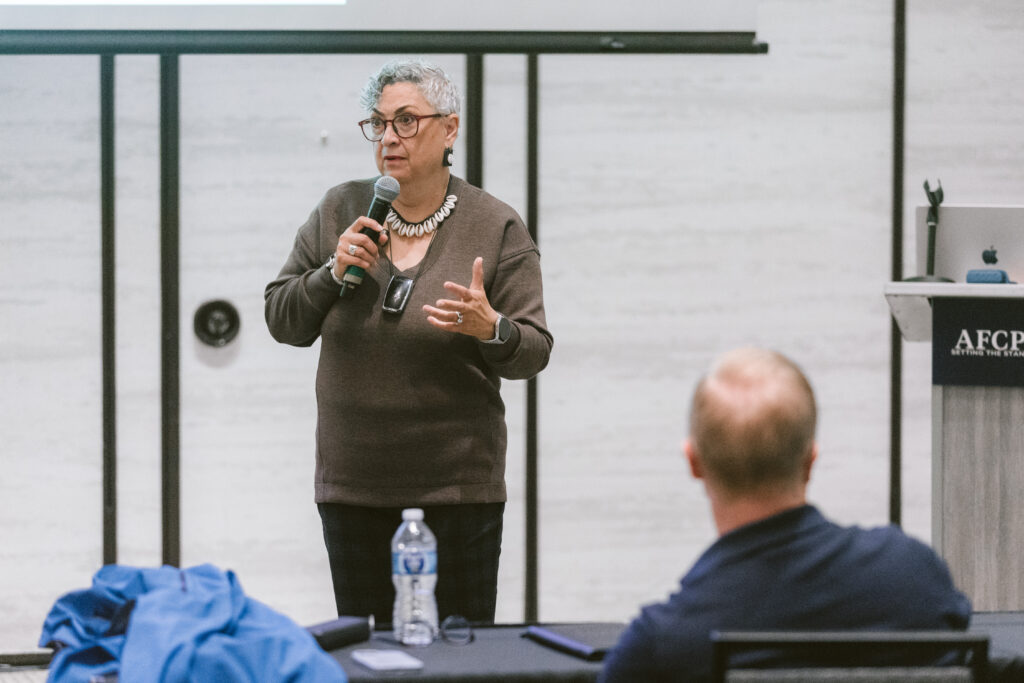
white woman standing in front of podium at Symposium

Putting It into Practice: Innovation, Updates, and Ideas
Share practical tools, techniques, and successful partnerships in financial counseling and education. Present programs, workshops, or case studies that demonstrate real-world impact.

Research to Practice

Showcase effective researcher-practitioner collaborations that advance the field. This could be a practitioner implementing research findings in their work, or a researcher testing hypotheses through practitioner partnerships. These collaborations bridge research and practice to improve economic well-being.

Research Paper

Present original research, literature reviews, or program evaluations related to financial counseling and education. Your audience includes practitioners, educators, and researchers—frame your presentation around key findings and practical implications to maximize impact across all three groups.

Student Research Paper*

Full-time undergraduate and graduate students can submit research for presentation. Accepted students receive a scholarship that includes complimentary registration to the 2026 AFCPE Symposium (November 17-19, 2026).

*Applicants must be current university or college students studying full-time at the undergraduate (at least 12 credits), graduate (at least 9 credits), or PhD (at least 3 credits) level. If a student is currently enrolled at an AFCPE Registered Education Program, full and part-time students at any level of study may apply.

If Accepted: The student will receive a Symposium Student Scholarship, covering the cost of registration.

Please note: Student Research Paper submissions are considered to present during a breakout session

Invitation to Present Awards

A $500 award will be granted to the highest scoring: 

  • Putting It into Practice: Innovation, Updates, and Ideas
  • Research Paper
  • Student Research Paper
  • Poster

Additionally, an award for “Best Symposium Research to Practice Collaboration” is available for this category which includes a monetary award of $1,500 and up to 2 complimentary registrations to participate in the 2026 AFCPE Symposium.  

This award is generously sponsored by National Endowment for Financial Education (NEFE).

Invitation to Present Frequently Asked Questions

Whether you’re looking to level set expectations should your proposal be accepted, seeking best practices on developing your proposal, or eager to learn about presentation delivery methods and proposal checklists, we are committed to setting you up for success. 

Congratulations! Here’s what happens next:

  • Register and attend – All presenters must register for and attend the 2026 AFCPE Symposium
  • Save 25% – Accepted presenters receive a 25% registration discount (up to three discounted registrations per submission)
  • Apply for scholarships – Need financial support? Scholarship applications open June 15-July 15
  • Earn credits – Get CEUs or Experience Hours for your presentation. See the Experience Guide and CEU Guide for details

Symposium submission topics should be relevant to personal finance, financial education, and/or financial counseling. Topic areas can include, but are not limited to:

  • Communication and counseling skills, including psychology of money, behavioral finance, teaching delivery, etc.
  • Working with economically vulnerable populations, including the unbanked, seniors, and those transitioning out of prison.
  • Regulatory changes, including tax changes, student loans updates, etc. 
  • Current events, including cryptocurrency, fintech, inflation, etc.
  • Advanced topics, including estate planning, alternative financial services, frauds/scams, etc.

Sure! Here is some guidance to consider for your Putting It into Practice proposal:

Submit a maximum 2-page, double-spaced proposal (4,000 characters including spaces) with:

  • Introduction and session goal/purpose
  • Intended audience and expertise level (beginner, intermediate, or advanced)
  • Planned presentation style (lecture, panel, workshop, etc.)
  • Overview of content to be presented

Tips for Success

  • Ensure your presentation fits within 50 minutes, including Q&A
  • Review the evaluation rubrics before submitting
  • Proofread carefully and have a colleague review for clarity and flow

See example: Putting It into Practice

Absolutely! Here is guidance for putting together your Research to Practice proposal:

Submit a maximum 2-page, double-spaced proposal (4,000 characters including spaces) with:

  • Introduction and session goal/purpose
  • Intended audience and expertise level (beginner, intermediate, or advanced)
  • Planned presentation style (lecture, panel, workshop, etc.)
  • Overview of content and how research informs practice (or vice versa)

Tips for Success

  • Ensure your presentation fits within 50 minutes, including Q&A
  • Review the evaluation rubrics before submitting
  • Proofread carefully and have a colleague review for clarity and flow

See example: Research to Practice

No problem! Here’s some suggestions for crafting your Research Paper proposal:

Submit up to 25 double-spaced pages in 12-point Times New Roman font, excluding citations (48,000 characters including spaces). Include:

  • Title and background
  • Purpose and conceptual framework or theory
  • Hypotheses or research questions
  • Methodology (data source, sample, variables, analysis)
  • Results, discussion, and implications for financial counseling and planning
  • Charts and images (combined into a single file for upload)

See example: Research Paper

Gladly! Here is guidance on putting together your Student Research Paper proposal:

Submit up to 25 double-spaced pages in 12-point Times New Roman font, excluding citations (48,000 characters including spaces). Include:

  • Title and background
  • Purpose and conceptual framework or theory
  • Hypotheses or research questions
  • Methodology (data source, sample, variables, analysis)
  • Results, discussion, and implications for financial counseling and planning
  • Charts and images (combined into a single file for upload)

See example: Student Research Paper

You can only be selected for one delivery method: 

50-Minute Presentation – In-person breakout session at the Symposium in D.C. Metro.

Poster – Display a poster at the Symposium and interact with attendees during a dedicated poster session. Submit a one-page PDF by October 31, 2026. Optionally, upload a 5-minute pre-recorded presentation to supplement your poster on the virtual platform. Additional details provided upon acceptance.

On-Demand (limited availability) – Pre-record a 50-minute session with asynchronous Q&A via the virtual platform chat. On-demand presenters must still register and attend the 2026 Symposium (in-person or virtual).

Here are takeaways pertaining to creating titles, descriptions, and learning objectives:

Title – Keep it short and use plain language. This is how your session will appear in the program.

Description (2-3 sentences) – Clearly explain what your session covers in an engaging way. Feel free to include humor, statistics, or questions to draw attendees in.

Learning Objectives (2-3 per session) – These appear in the program and are used for continuing education credit. Answer: What will attendees take away from this session?

Format each as: “Attendees will: ____________”
Example: “Attendees will be educated on updates to the credit industry.”

All submissions are reviewed anonymously by five reviewers—do not include any identifying information (names, organizations, universities, etc.). Click or tap on the Scoring Rubric and Topics List for additional context. The topics listed below are suggestions, not an exhaustive list.

We hope these Submission Checklist steps help:

  • Choose your Session Type
  • Choose Delivery Method
  • Create:
    • Title
    • Description
    • Learning objectives
  • Write session proposal or abstract
  • Gather submission information
  • Create your Submission Profile (Opens 3/16)  
  • Enter required information
  • Submit by Friday, May 8th. 

Accepted presenters will be notified in early August.

Here are accepted proposal responsibilities for proceedings:

Research Papers and Posters: 
Authors of accepted proposals are expected to submit their final, revised manuscripts in the correct format for publication to the Proceedings* by  September 30, 2026.

For Research Papers, the maximum length is 25 double-spaced pages, including tables, charts, figures, BUT citations and references may be in addition to maximum page limit. Paper submissions should follow APA Guidelines. Tables, charts, and figures should be integrated into the text, and the body of the paper should start immediately under the abstract. In addition, running heads will not be used. All pages should be numbered. Pay special attention to section headings, citations within the text, and references.

Putting It into Practice: Innovation, Updates, and Ideas
Authors of accepted submissions are invited to submit a two-page summary of their presentation for the Proceedings. This deadline is September 30, 2026.

Why submit to the proceedings as a practitioner? 
Because it’s a great way to ensure your findings and ideas are available to each and every Symposium participant, regardless if they are able to view your presentation in person.

*Examples: 2025 Proceedings, 2024 Proceedings2023 Proceedings2022 Proceedings

Breakout speakers will be confirmed in early August.

*If submission is accepted, delivery method may not be accommodated based on schedule and space availability. An alternate delivery method may be offered.

Sure! Right click on your screen and click the print option. Select “print to PDF” and save to your computer. 

AFCPE is committed to providing persons with disabilities with substantially equivalent access to all of our programs, services, and events. If you have an ADA accommodation or modification request, please complete the ADA Accommodation Request Form by clicking here or contact us at accessibility@afcpe.org.

Invitation to Present Testimonials

AFCPE’s Commitment to Diversity & Inclusion:

“Diversity and inclusion ensure a safe, positive, nurturing, and tolerant environment with mutual respect, free of prejudice. They celebrate differences, including those visible and invisible, in addition to thoughts and opinions that are essential for the involvement and empowerment of our society.”

– Definition established by AFCPE Diversity & Inclusion Task Force

At AFCPE, every decision we make goes through an equity screen. Here are the questions we ask ourselves when making decisions. Before submitting, make sure your submission has a lens of inclusion.

All submissions are reviewed anonymously by five reviewers. Do not include any identifying information. (i.e. names, organizations, universities, etc.

Comments are closed.