 Book Review: Overcoming Financial Trauma: How to Break Free from Guilt, Build Wealth, and Redefine Success by Rahkim Sabree
Written by: Valerie Richards, AFC®, MSFP
Book Review: Overcoming Financial Trauma: How to Break Free from Guilt, Build Wealth, and Redefine Success by Rahkim Sabree
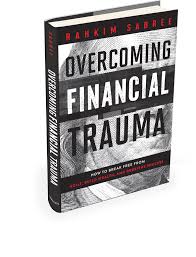
Overcoming Financial Trauma offers a thoughtful look at the systems, experiences, and personal histories that can leave people feeling powerless in their financial lives, while also helping readers see a path forward. Rahkim Sabree opens the book by sharing deeply personal memories, from facing an eviction notice at a young age to going without money for necessities and missing out on experiences that may sound small to others but can have a lasting impact on a young child, such as the school book fair. These moments stayed with him, but he explains that he did not fully understand their impact until years later when he recognized that the stress, anxiety, and instability he had carried had a name: financial trauma.
In Overcoming Financial Trauma, Sabree explores the many layers of financial trauma through his own story, his parents’ experiences, and the stories he encountered during more than a decade in the financial industry. By pairing his personal experience with research, Sabree helps readers better understand financial trauma and offers practical tools for moving forward. The book is organized around his framework, “The 3 E’s™”: Exposure, Education, and Execution, with each part focused on one of the three E’s. These tools give readers a place to begin, whether they are working to heal their own relationship with money or hoping to better support others.
Sabree also uses his observations to explain the emotions and behaviors behind financial choices and patterns. One point that stood out to me was his explanation that people can experience and internalize similar circumstances in very different ways. He shares this through his observations of his own siblings, who grew up in the same household yet developed very different money stories. Although they shared many of the same experiences, his brother’s experience living part time with their father and his sister’s younger age influenced how each of them understood and responded to their household circumstances, resulting in three distinct perspectives. The same can be true for spouses and families. Even with strong communication, each person brings their own beliefs, fears, and learned behaviors around money into a relationship. People often follow familiar patterns shaped over time, even when those patterns no longer serve them.
Rahkim reflects, “Based on my experiences and the formation of my money story at the time, it didn’t occur to me that it would be possible or likely that I could do anything, but what I was witnessing and was a part of. That I could have a mortgage or even buy groceries without food stamps was such a far-off concept to me in my mid to late teens.” This statement stood out to me because it shows how early experiences shape what we believe is possible. If one can’t imagine a life where they can buy food without food stamps, where and how do they even begin to plan for a brighter financial future?
Sabree also explores how history and culture influence spending behaviors and financial decision-making. He discusses how values and goals can become misaligned when people feel pressure to support family, maintain appearances, or navigate financial success in ways that may distance them from their communities. Questions such as “What is enough?” and “How much should I sacrifice to help others?” are explored with honesty, research, and lived experience. He writes, “The American Dream is an illusion of success. It plays to your vanity and ego while slowly isolating you from community.”
One of the book’s greatest strengths is Sabree’s vulnerability. He openly shares both successes and failures, especially throughout his entrepreneurial journey. His reflections give readers an honest look at the emotional toll entrepreneurship can take: “Entrepreneurship looks great on social media, but it’s not often discussed through the lens of how isolating it can be. You’re in this space of pure reconstruction and getting to know your deepest flaws and strengths.”
Throughout the book, Rahkim continually reminds readers that money is never just about numbers. It is deeply emotional, psychological, physiological, and even generational. One especially impactful passage states, “If we worship, idolize, and otherwise give it power, it will have power over us that is reflected in how we use it and pursue it. Inversely, however, if we heal our relationship with money psychologically, physiologically, and energetically, money will serve us.”
Sabree also dives into the science behind financial trauma, explaining how financial stress is processed in the body. Experiences such as layoffs, denied credit, collection calls, missed payments, or financial emergencies can trigger the nervous system to respond as though it is under attack. He explains that financial behaviors are not always simply “good” or “bad” decisions. Instead, they are often reflections of the nervous system’s perception of danger. For financial counselors and educators, this perspective is invaluable. Understanding how biology, history, and lived experience shape financial behavior allows us to approach clients with greater empathy and effectiveness.
One of the most moving sections of the book centers on epigenetics, generational trauma, and survival responses. Sabree shares a story that was particularly impactful to me: “One of my favorite stories to tell is how every year from my late teens until I turned 30, my dad would reflect on where he was at my age the year, I was born and where I was when I reached the same age. He would tell me that he didn’t envision living to 30 himself and that to see me reach 30 was not only a blessing, but the breaking of a generational curse.”
This story highlights an important truth that is often overlooked in financial planning: it is a privilege to envision a future. How can someone prioritize retirement planning or investing if they have never truly believed they would live long enough to experience it? Sabree challenges readers and financial professionals alike to recognize the profound impact trauma can have on a person’s ability to dream, plan, and build wealth.
After unpacking the emotional and historical roots of financial trauma, Sabree turns to practical application. He discusses money shame, money scripts, and financial systems in ways that are accessible to readers from a wide range of backgrounds and income levels. Drawing on both his financial expertise and behavioral research, he introduces tools and exercises that help readers better understand themselves and their financial patterns. He also shares his TRUST™ Framework, which offers practical guidance for financial healing and growth.
The book concludes by turning outward, offering guidance for professionals who want to bring meaningful financial wellness solutions into their organizations. Sabree outlines strategies that encourage readers to recognize and reframe thought patterns, set healthier financial boundaries, and begin building a more grounded relationship with money.
Overcoming Financial Trauma is a combination of personal experiences, research, and practical action steps. Although this book is recommended for human resource professionals, financial professionals, and first-generation high-income earners, I believe it would benefit just about anyone seeking a deeper understanding of the emotional and behavioral side of money and the systems society has built around it.
Lastly, I really enjoyed that there was a themed playlist to go along with the book. It was such a thoughtful bonus.
Valerie Richards is Education Program Manager at AFCPE® and an Accredited Financial Counselor. Visit her FindAnAFC profile along with her LInkedIn profile.