 Kids Corner: Roth IRA for Children and Teens: Eligibility Rules, Contribution Requirements, and Long-Term Planning Opportunities
Written by: Shari Evans, AFC®, MQFP
Many kids find themselves working during the summer months. Jobs like lifeguarding, babysitting, pet sitting, lawn care, and so much more top the list of jobs often filled by adolescents. As children and teens earn income this year, this article is intended to serve as a practical guide for directing a portion of those earnings towards a long-term financial goal. For families with children and teens who have earned income, it may be time to consider opening a Custodial Roth IRA.
Section 1. Eligibility Begins with Earned Income
A Custodial Roth IRA (Roth IRA for Kids/Teens) can be opened by a parent or guardian of a minor child that has earned income. The parent or guardian is the custodian of the account and the funds within the account belong to the child. The minor child must have earned income to be able to contribute to a Custodial Roth IRA. Earned income may come from traditional W-2 employment or self-employment activities that generate reportable compensation. Compensation from activities such as lifeguarding, lawn care, babysitting, tutoring, and similar work may support Roth IRA contributions when properly documented. For example, if your adolescent earned $900 this summer walking dogs for the neighbors, you are eligible to contribute $900 into a Custodial Roth IRA for your adolescent. The key factor to remember is that the contribution cannot exceed the income earned by the adolescent.
Typically Qualifies May Qualify with
DocumentationGenerally Does Not
Qualify
W2 Employment Babysitting Allowance
Lifeguarding Lawn Care Household Chores
Retail Work Pet Sitting Birthday money
Restaurant Work Tutoring Gifts from relatives
Camp Counselor Family business employment Investment Income
Internship income Content creation income Interest and dividends
Section 2. The Family Match
If a child or teen has earned income and parents or guardians would like to encourage saving and investing, they may contribute up to the amount of the child’s earned income into the Custodial Roth IRA while allowing the child to keep, spend, or save the actual dollars earned. This approach is similar to the concept of an employer retirement match and may be a great segue into the employer match option they may experience in future working years.
Section 3. Understanding Contribution Limits for Minors
The contribution is limited to the maximum contribution allowed for the year. For 2026, the
contribution limit is $7,500 which means the contribution for a minor cannot exceed $7,500 even if they’ve earned more than $7,500 this calendar year. Of note, the contribution limit cannot exceed the income earned for the year so if the minor earned $4500 in calendar year 2026, the maximum amount allowed to be contributed is $4500. Families should verify current IRS limits each year prior to contributing.
Section 4. Custodial Roth IRA’s and Account Ownership
Although the parent or guardian opens the Custodial Roth IRA, it’s important to understand that the account is actually owned by the minor but managed by the custodian (parent or guardian that opened the account). The account transfers to the control of the child upon reaching the applicable age of termination (sometimes referred to as the age of majority), which varies by state and brokerage provider. The age of termination may range from 18 to 25 so be certain to check state specific guidelines.
Section 5. The Long-Term Impact of Early Contributions
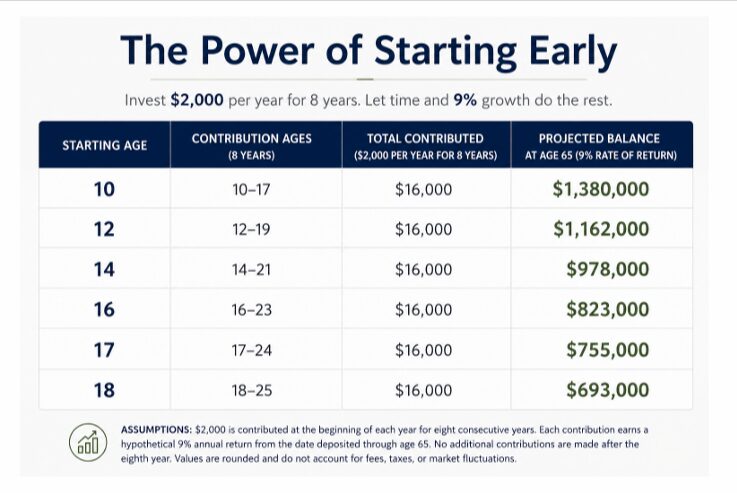
In this chart, you’ll see how an annual contribution of $2,000 each year for 8 years can create a substantial account balance. Take a look at the numbers to see how years of compound growth can demonstrate the powerful impact that time has on long-term wealth accumulation. Please note that these numbers are examples of projected estimates and not guarantees of exact rates of returns.
Section 6. Creating an Investor Identity Early
For many adolescents, their first paycheck is the formative stage of their interaction with earned income. This is a great time to intentionally shape how the income earner connects earning income with investing. Creating an opportunity to exercise an investment muscle may be the small financial habit that sticks and has lasting positive impact. A young person who begins investing early may see themselves as someone who not only earns income, but who also understands how to build wealth over time.
Section 7. Compliance and Documentation Considerations
Dates worked
Service provided
Amount earned
Method of Payment
Payment records or bank deposits
Customer/employer contact information
Section 8. Conclusion
While much of the conversation surrounding Custodial Roth IRAs focuses on contribution limits, eligibility rules, and tax advantages, the real opportunity may be much bigger than the account itself. A Custodial Roth IRA can become a child’s first experience with investing, long-term planning, and understanding that money invested early has something incredibly valuable working in its favor: time. The projections in this article demonstrate how investing early can create a strong financial foundation for the next generation. Perhaps more importantly, they illustrate a lesson that many investors wish they had learned much earlier in life: when it comes to building wealth, time is often more powerful than amount.
Shari Evans, AFC®, MQFP®, EML is a financial counselor, educator, corporate facilitator, and
professional speaker specializing in financial wellness, military family finances, retirement
planning, and workplace financial education. As the founder of Budget Based Lifestyle, she
works with individuals, couples, military families, and professionals across government,
nonprofit, and private-sector organizations to help them build practical financial skills and long term financial confidence. As both a financial professional and parent, Shari is passionate about helping families use financial milestones as opportunities to develop lifelong financial capability and confidence.