Written By: Maddie Orange, AFC®
 Have you ever read a book and thought, “Where was this 15 years ago?”
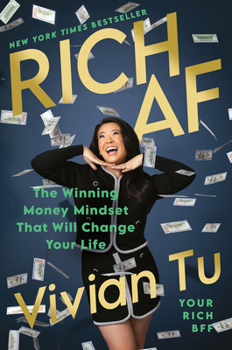
Rich AF by Vivian Tu is one of those books for me and could be a great tool for any financial counselor working with young professionals.
Let me explain.
Diversity in Personal Finance Education
Rich AF is a welcome addition to a growing number of personal finance books written by women of color. As an Asian American woman, I am excited to see women of color continue to produce quality, accurate, and relatable content around personal finance. Vivian’s narrative weaves in examples of familial obligations, navigating white, male-dominated spaces, and a clear desire to lift up communities that are economically disenfranchised. This shared world view would have been welcome in my early twenties, by someone “who looks like me.”
Additionally, Vivian doesn’t shy away from writing the same way she speaks. It’s easy to imagine her giving the exact same advice – verbatim – to friends and colleagues during a happy hour after a long workday at JP Morgan. The book’s casual, conversational tone (which doesn’t shy away from curse words) further emphasizes that it is targeted toward a more relaxed audience.
Think About Money Like a Rich Person
The premise of Rich AF is that it will teach you how to interact with money like “a rich person.” The first chapter, “Education for this Era”, lays out 8 characteristics of rich people. These include thinking long term; being well-connected; focusing on investments over income; and having an abundance mindset. The rest of the book refers back to these traits as ways to frame effective money habits. Vivian acknowledges that conventional advice to just spend less doesn’t work for people who are low-income or trying to live in safer (and more expensive) areas. She also shares statistics on how people of color are statistically at a disadvantage when it comes to earning potential. This acknowledgement that many individuals face systemic discrimination or circumstances glazed over by others was appreciated and is reflective of the real issues financial counselors face when helping clients.
Earn Income Like a Rich Person
The second chapter, “I Know My Worth”, reviews best practices for negotiating higher salaries and growing your career. Vivian stresses the importance of strategic networking, keeping track of work accomplishments, and being open to a side hustle that fits into one’s life. She also believes that focusing on maximizing income is more important than budgeting. While your income potential is virtually limitless, she argues; you do have a minimum cost for living expenses. Thus, increasing income is an overall wiser use of time and energy.
Budget Like a Rich Person
The third chapter, “I Am in Charge of My Money”, introduces different ways of keeping track of living expenses and forming a budget. Vivian points out that “even rich people budget” in order to ensure they have enough cash to take advantage of investment opportunities that arise. They also often have limited liquid cash to live on, since most of their net worth is tied up in illiquid assets like investments or real estate. She then gives four examples of budget structuring and why you might want to use them. If a financial counselor were reviewing different ways of budgeting with a client, this section of the book may help them succinctly describe different ways of tracking their money. Vivian also talks about value-based spending, and how it helps people determine if an item is worth the time spent earning it.
Finally, she has a section on setting boundaries with family and friends who may ask you for financial support once you begin earning more money and/or having more discretionary cash because of effective budgeting. As a counselor who has helped several clients struggle with this very issue, I was very happy to see it included as a topic in this book.
Save Like a Rich Person
The fourth chapter, “I Take Care of Future Me,” reviews best practices in how to bank effectively. Vivian explains how banks work, how to shop around for the best account offers, and that it may help you budget to have multiple checking and/or savings accounts for different categories. She also reviews what high-yield savings accounts are and what an emergency fund versus a sinking fund is. When discussing how to lower living expenses, she reminds us that lowering your largest expenses (like rent) is more effective than trying to deprive yourself of smaller discretionary purchases (like a daily latte). Advice such as this may resonate with younger readers who value eating out but, for example, wouldn’t mind having roommates. Finally, the book reviews what an “FU” fund is – having enough saved to quit a job or leave an unsafe situation – and reminds us that we are worth the effort needed to have this financial freedom. The tone of “you are worth this trouble” resonated with me, as it is also something I have said to clients who are struggling to prioritize savings.
Invest Like a Rich Person
The fifth chapter, “I Wasn’t Born Rich, But My Kids Will Be” is a primer on how to invest like a rich person. The tongue in cheek lessons here is that rich people “lazily” build their wealth by focusing on long-term gains rather than a short-term payout. Their strategies favor delayed gratification and understanding how to patiently wait for assets to appreciate. Vivian breaks down how to invest in this manner in six steps, which center on: understanding long-term asset appreciation; not spending more than you make; managing your debt wisely; making use of tax-advantaged accounts; and understanding your investment goals and time horizons.
The remainder of the chapter reviews different types of asset classes and different kinds of investment accounts. This section, in particular – as well as the helpful infographic near the beginning of this chapter – could be an excellent companion for financial counselors working with clients new to investing. It lays out the asset classes and types of investment accounts in easy-to-understand terminology. The chapter concludes with Vivian’s recommendations on how to invest depending on how much money you have, as well as your comfort level in managing your investment accounts on your own.
Use Credit & Pay Taxes Like a Rich Person
The sixth chapter, “I am Ready for Financial Domination,” is a catch all for other important topics necessary to personal finance. These include understanding credit, managing debt, paying taxes, and building a team of financial professionals to support you. This chapter was the only section where I was slightly disappointed with the content. For example, the book warns against the dangers of using a debit card – i.e. it gives vendors direct access to a checking account – but it fails to mention that there are consumer protections for fraudulent debit card charges. Additionally, Vivian writes, “I think everyone should have a credit card.” While I agree with her assertion that a strong credit history is critical to financial success, there are instances where an individual should not have access to a credit card. People who struggle with shopping addictions, for example, may need to have credit card access curtailed.
However, the chapter does an overall excellent job of reviewing what can be complex topics to understand. The taxes section in particular is helpful and entertaining, comparing tax brackets to the government wanting desirable vs undesirable pizza toppings. She also stresses the importance of working with CPAs, estate attorneys, and CFPs to support your financial decisions as needed.
Break the Cycle by Becoming A Rich Person
Rich AF concludes with four “Solid-Gold Truths.” These mantras encourage us to shed unhelpful money beliefs inherited by previous generations, our parents, or society in general:
- Solid-Gold Truth #1: Wealth is not meant to be hoarded.
- Solid-Gold Truth #2: Spending is not inherently shameful.
- Solid-Gold Truth #3: Money spent to impress others is money not worth spending.
- Solid-Gold Truth #4: Complaining but Not Doing Anything . . . Doesn’t Do Anything.
By embracing these truths and becoming rich, Vivian argues, we’re beginning to break generations of systemic oppression and inequality. She acknowledges that yes, larger legislative and societal action is needed to support disadvantaged communities. However, these individual mindset shifts and money management actions begin to move the needle.
Overall, this book is a well-rounded personal finance primer. I would readily recommend this book to clients at the beginning of their professional careers, given its emphasis on growing wealth. Note that the book uses frequent expletives and draws most of its real-life analogies from an urban lifestyle, so it may resonate deeply with some clients while possibly repelling others. I’d caution other counselors to consider their clients’ preferred communication style before recommending.
That said, her focus on representation, diversity and equality successfully reframe foundational personal finance topics in a deeper way. This approach may resonate with clients seeking authors who understand their lived experiences. I look forward to reading her next book, Well Endowed: The Secrets to Strategic Spending, Building a Financial Foundation for You and Your Family, and Creating Lasting Generational Wealth coming out in February 2026.
Maddie Orange is a Master of Public Health, an Accredited Financial Counselor®, and Founder of Orange Jalapeños Finance. Connect with Maddie on LinkedIn and view her FindAnAFC.org profile to learn more about her services and expertise.